

Impact
Turning potential into opportunity and opportunity into lasting career growth.
Our impact
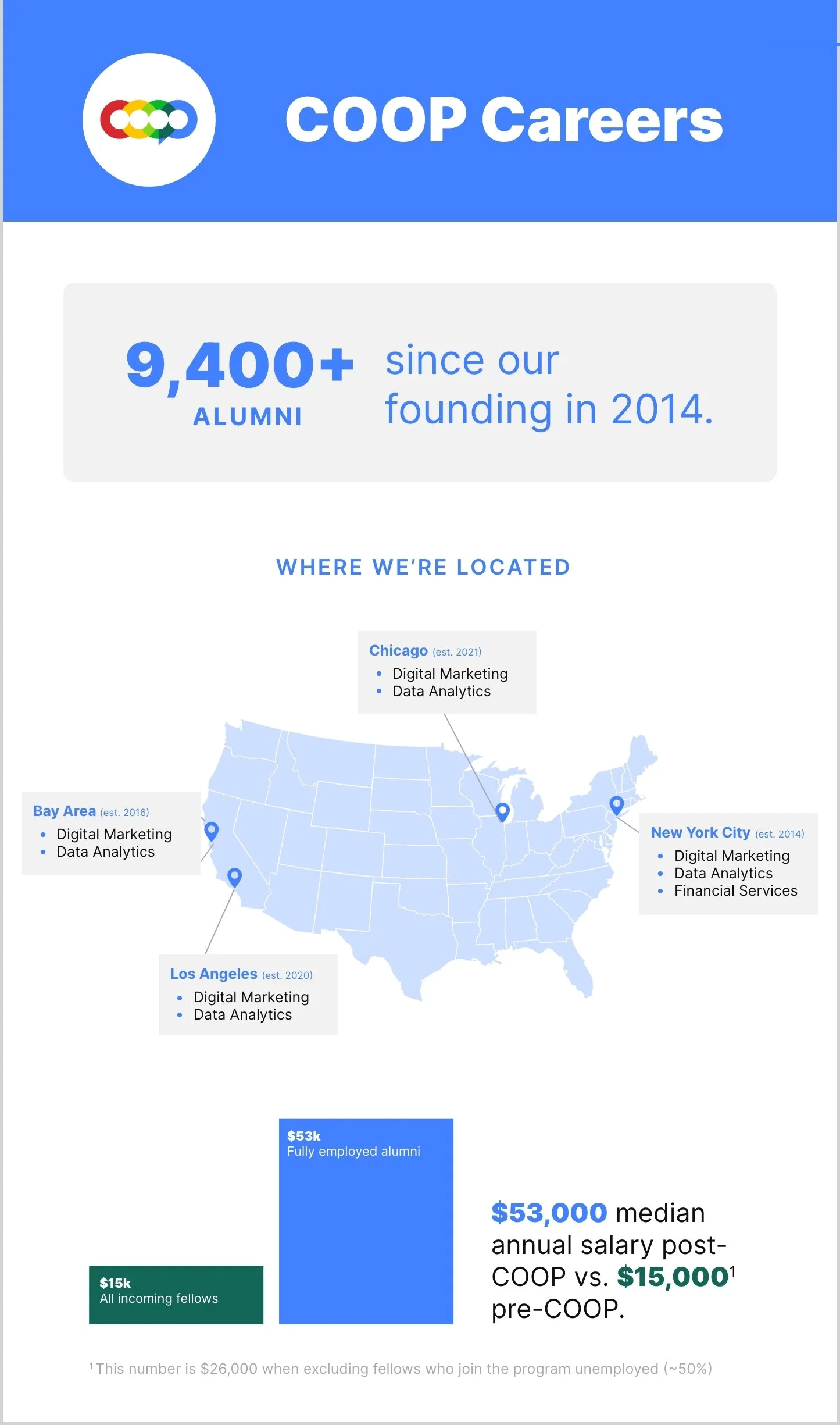
Since 2014, COOP has helped more than 9,400 first-generation and low-income college graduates move beyond underemployment and build the careers they deserve. That progress has been made possible by the collective support of our funders, partners, alumni, and staff. And this year, we’ll reach an incredible milestone: 10,000 fellows served by the end of our Fall 2026 cycle.
Who we serve
COOP's alumni reflect the population most impacted by underemployment: 100% of our fellows are first-generation college graduates and/or were eligible for public financial aid in college, and most meet both criteria. Our community is majority people of color and skews female — about 6 in 10 alumni are women. Our alumni come from hundreds of colleges nationwide and represent every major, from business to STEM.
The numbers
Historically, 60% of COOP alumni secured their first full-time, college-level job within 12 months of completing the program — earning more than $53,000 on average.
Even in today's difficult job market, 50% of our most recent alumni escaped underemployment within 12 months — nearly double Strada's 10-year national baseline of 27%.
According to McKinsey, escaping underemployment can increase a person's lifetime wealth by more than $300,000 over 30 years. At roughly $6,000 per fellow, that's a 50x return.
The public benefits too: McKinsey estimates more than $60,000 in added value over five years per person, through increased tax revenue and decreased need for public assistance — a 10x return for taxpayers.
Alumni at a glance
87%
are first-gen college grads
82%
are eligible for federal financial aid
96%
are people of color
100%
of fellows enter the program unemployed or underemployed
Putting our impact to the test
We're proud of these results—and we believe meaningful impact requires a willing to keep asking whether we’re deliveringThat's why COOP is participating in an independent randomized controlled trial conducted by MDRC, comparing outcomes for approximately 2,000 underemployed grads admitted to COOP who were randomly assigned to either participate in the fellowship or a comparison group. Early findings are expected in 2028, with formal study results summarized in a report by early 2029 and, earnings tracked for several years after. We expect the current labor market to influence our outcomes, and we're committed to learning from the results.
We're grateful to have you with us on the journey to 10,000 and beyond.
 Donate